My Digital News Report

Student Number: 17338193 Name: Nicole Dawson

Introduction:

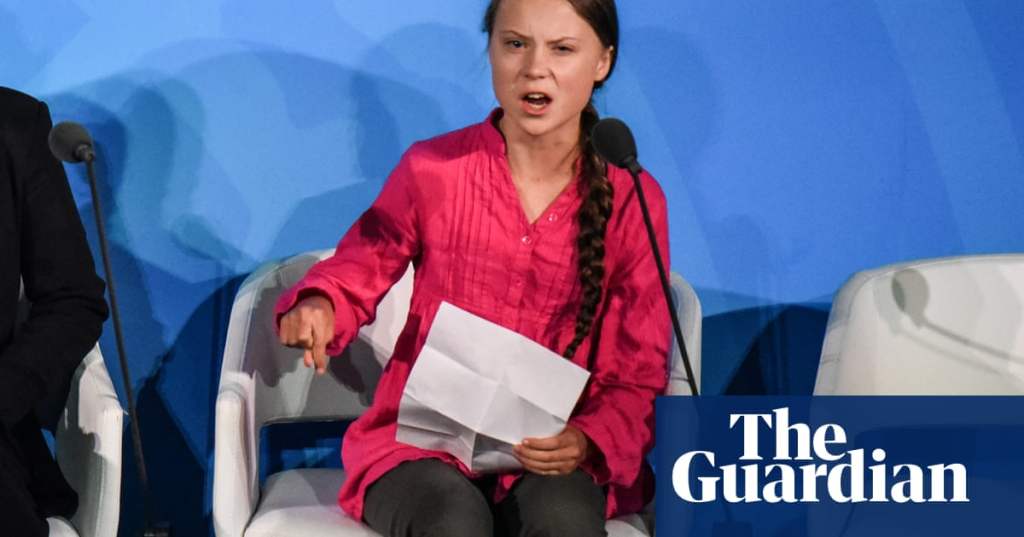
This news story sheds light on one of the biggest issues that our societies, population and entire planet has ever endured, climate change. This news story is a footnote for the bigger picture and is only one of many demonstrations that have been organised in order to grasp the attention of our governments and world leaders in an attempt to make them act on this crisis and make drastic changes to their policies. The severity of the situation we are in is something that needs to be taken seriously, and although each person can do their part, it is the people in charge that need to make the major moves. At the beginning of October, Ms. Jane Fonda, who is a legendary actress, model, philanthropist and activist has quite literally up ended her life and moved to Washington for four months, vowing to take to the streets of Washington every Friday, tactically in front of the capitol building, in protest for the fight against climate change. She has set up what is known as ‘Fire Drill Fridays’ , https://firedrillfridays.com/take-action, where she has created an online public presence and has invited anyone and everyone to join her in her fight. They have stated demands related to our oceans, respect for or indigenous lands, environmental justice, and so on, that are all essential to this fight. They’re taking it upon themselves to make noise in order for the them to be heard. The naming of their call to action came from inspiration from the youth climate change activist and Nobel Peace Prize nominee, Swedish 16-year-old Greta Thunberg who said that “We must act as if our house is on fire… because it is.”
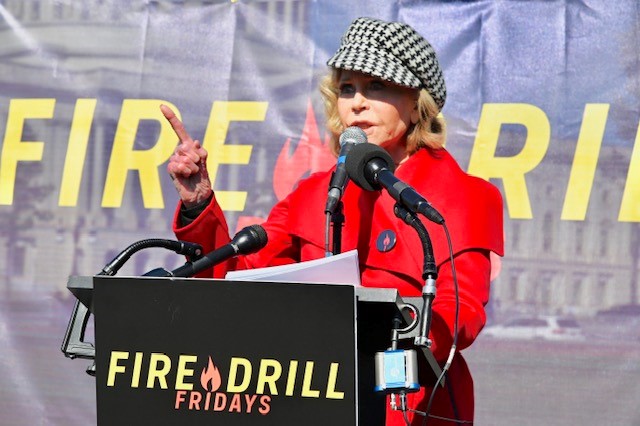
This image has an empty alt attribute; its file name is 2019-10-11-firedrill-jane1.jpg
Jane at the Launch of Fire Drill Fridays
Greta Thunberg – “We must act as if our house is on fire”

Report:

On October, the 25th Jane Fonda was arrested, again, alongside fellow A-list celebrities and long-time friends, who were supporting her in her protest, Ted Danson and Sam Waterson. They were 3 of 16 people who were taken into police custody that day. This created a huge amount of noise across the board, on the news, on all social media platforms etc. and sparked the idea for me to write this report on, what I believe to be, the most relevant current affairs in our world right now, our fight against climate change, in order to save our planet.
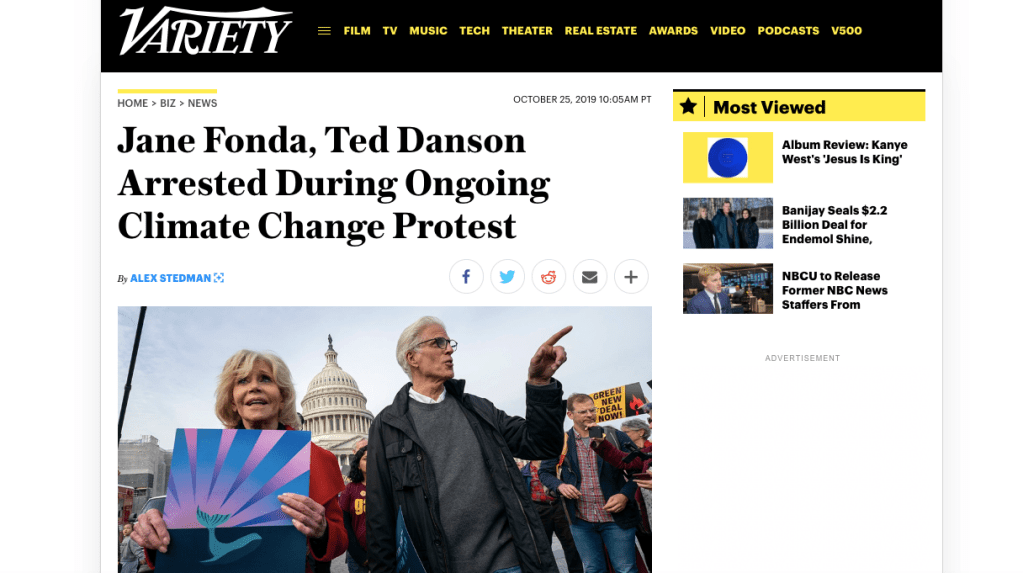
Variety Headline creating awareness

The idea came to Fonda, as she says on ‘janefonda.com’, over labour day weekend when she was in Big Sur. She was with friends and she started to read, highly acclaimed author and social activist, Naomi Klein’s new book “On Fire: The {Burning} Case for a Green New Deal. She said that this book really “brought home the urgency of our situation” and from there it was a whirl wind of organisation and action.
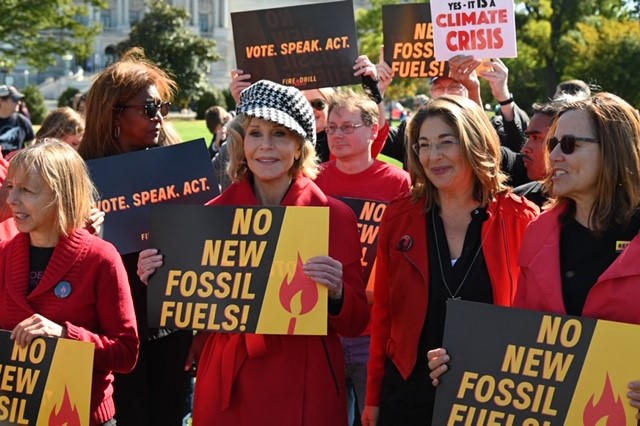
The official launch of ‘Fire Drill Fridays’ took place on Friday the 11th of October. Jane Fonda was present and led the launch, accompanied by a large number of people including young student activist, 17-year-old Jerome Foster, Naomi Klein, Annie Leonard, the head of Greenpeace USA, along with scientists, movement leaders and supporters of all ages. Passionate speakers took to the microphone, including Jane herself to preach about their mission and express their views on the topic. As simply stated also on ‘janefonda.com’, “It was a great launch. the weather was perfect. All the speakers were wonderful, the press coverage was awesome.” Although Jane, her granddaughter and around 14 other people got arrested that day, it was fair to say from the get go that she had started something significant for this fight and they would not be going down without a fight. Seeing live footage of 81-year-old Jane Fonda getting put in plastic handcuffs and taken into a police car seemed pretty badass to me… I asked myself what was I doing to show my dedication to the cause? https://twitter.com/FireDrillFriday?ref_src=twsrc%5Etfw%7Ctwcamp%5Etweetembed%7Ctwterm%5E1187767484310573058&ref_url=https%3A%2F%2Fvariety.com%2F2019%2Fbiz%2Fnews%2Fjane-fonda-ted-danson-arrested-climate-change-protest-1203383657%2F
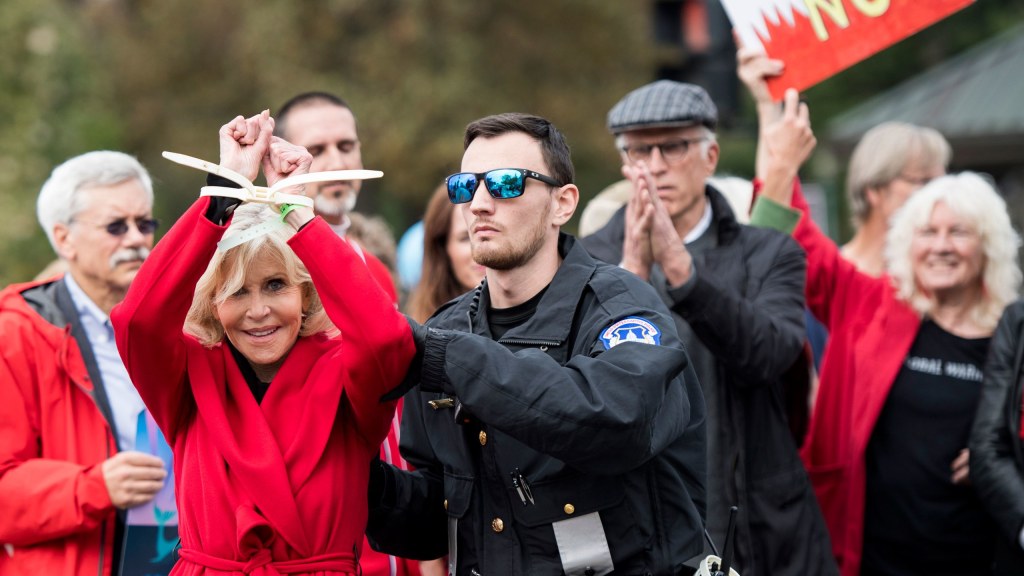
Making a stand – even in handcuffs

Immediately after paying the required 50$ (Fire Drill Fridays provided the money for those who didn’t have the 50$) and being released from their cells, they all walked to a local coffee shop and debriefed. Regardless of getting arrested, the protesters were determined to carry on their fight and Fire Drill Fridays became one of all of their main priorities.

As well as forming their own website stating what they are, the mission statement, the demands they want to see met, their overall goals and what we all, as citizens and people can do to aid the process of this mission, they have also established a social media presence on Instagram, Twitter and Facebook. However, it is the website that is equipped with the entire low down on their demands and even a timeline and calendar with dates and times of protests and the subject of those exact events.

https://twitter.com/FireDrillFriday?ref_src=twsrc%5Etfw%7Ctwcamp%5Etweetembed%7Ctwterm%5E1187767484310573058&ref_url=https%3A%2F%2Fvariety.com%2F2019%2Fbiz%2Fnews%2Fjane-fonda-ted-danson-arrested-climate-change-protest-1203383657%2F

As a way to share and express their demands and goals of their action, everyone is invited and encouraged to follow Fire Drill Fridays Facebook page and each Thursday, at 7pm EST there will be, what they are calling, ‘Thursday teach-ins’. These are live-streamed videos where celebrities, scientists and “folks most impacted by climate change who live in frontline communities” will discuss the issues addressed each Friday in more depth. This is an attempt to educate people and give them the knowledge they need prior to Friday protests. Hopefully, through these teach-ins, on-lookers can become more informed about the main reasons behind the protests and encourage them to see the severity of our planets situation. https://www.facebook.com/firedrillfriday/

This one fight for action by these protesters is a calling for the US government officials to begin acknowledging the fact that drastic change needs to happen now or else the world as we know it may suffer from irreversible damages in the coming years, even months. The publicness of these marches and speeches are also in order to echo the message not just to the politicians who purposely close their ears to the noise but also the 16% of US adults that said, “Global warming is not happening” when asked about it, according to ‘Statista’ as of April 2019. 16% of adults in one of the largest and most powerful countries in the entire world don’t even believe we have a crisis on our hands. I found this hard to believe at first and then when I saw that that number had actually increased from it being 13% in October 2017, I was shocked, as the activism to raise awareness towards climate change and global warming has been at an all-time high the past year and a half. https://www.statista.com/statistics/663247/belief-of-global-warming-according-to-us-adults/

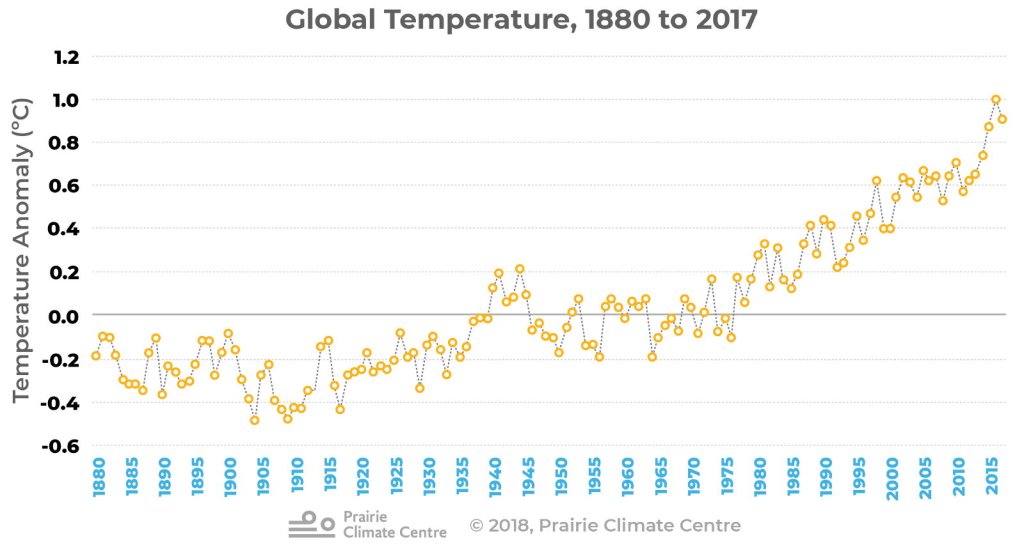
Image result for simple diagrams in relation to severe climate change in recent years
Graph sourced from The New York Times
Sourced from Climate Atlas of Canada

No matter how passionate and informed a single individual is, and despite the common saying ‘quality over quantity’, this issue is one that affects every single person on the planet whether they like it (even know it) or not. Many civil rights and activism topics including feminism, racism, are topics that involve a huge amount of discussion and change among ignorant and uneducated individuals. The difference with this issue is it is not a matter of segregation, as it is the world around us that we are failing to keep clean and healthy, and soon it won’t be able to protect itself any longer. Jane Fonda is a remarkable 81-year-old woman who is doing what she does best to make a difference in this world, spread the word and go straight to the source. An 81-year-old woman who has vowed to get arrested every single Friday for four months if it means change will come about. An 81-year-old woman who cares about our planet, the people in it and wants to take advantage of the power of politics. She, along with every man, woman and child marching with her in Washington each week should be saluted. The least we can do is get behind their noble actions, literally, figuratively, or any way we can, and fight this fight together.
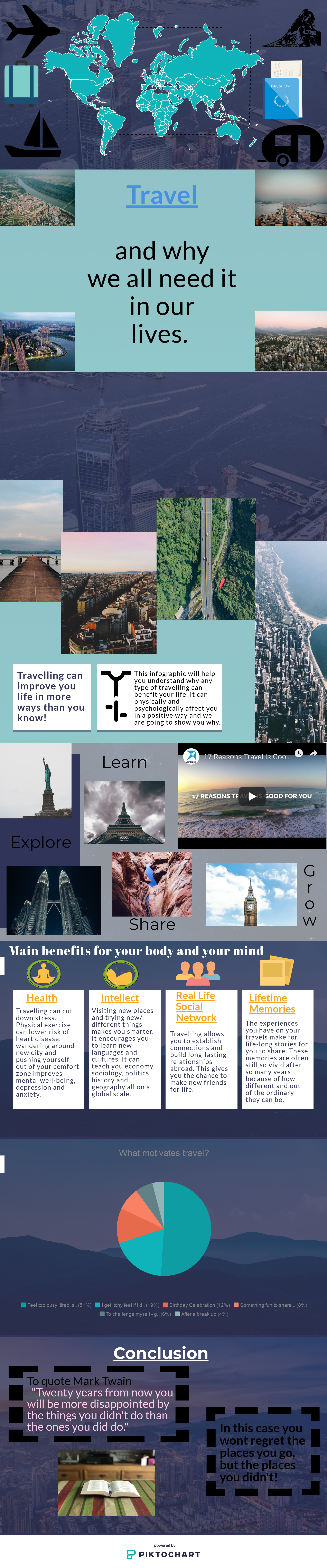
Badge 5: Cumulative Critical Review of My Learning

There is no doubt in saying that there was a massive amount of learning acquired through the wide range of activities and lessons taught in this module. The online classes, readings all coming together in the practical work involved in the badges highlighted the importance and benefits of social media, the tools involved and the subject of social computing as a whole. From communication, to management, to presentation of information and so on, the activities I completed in the making of this module were extremely helpful in showing me how to efficiently use the skills that I know already and taught me new ones along the way. Learning new skills and new information on the benefits of social media and computing has shed light on the impact of these topics in our everyday lives and how they can be put to good use in the future. I plan on reviewing the learning that I acquired in this module through talking about specific issues and examples where the topics covered are useful for people, companies, students and all people now and in the years to come. 

I began looking at different areas and situations where the lessons and activities would be most relevant and best show what I learned, why it was important and how it can be applied in the future. Many of the topics we covered can be linked back to the workplace and how they are run using social media/computing. What we learned in relation to this was how effective communication in any work environment is essential, how managing information using social media tools can be helpful and improve efficiency, and how the use of any social computing activities ensures a smooth working environment. The use of social media directly for employees in any workplace encourages social interaction and comradery, which is always important. 

A journal article that I analysed linked to the topic highlighted the importance of these lessons. They explained how the understanding of how “they enable and constrain the communicative activities through which work is accomplished” because it is these activities that define organisations. They put a strong focus on internal communication between employees via social media. They also admit that social media has a huge impact on the way organisations can connect with external stakeholders, customers and explore issues linked to branding or marketing. Like every experiment, there were positive and negative results in the findings, but, this article proved that what we learned is applied in day-to-day life and, as stated in the article as, is spreading rapidly in these areas. Effective communication and use of social media/computing tools is extremely important in a workplace and I hope that as time goes on, the negative aspects around this can decrease. In the future, no matter what job/career I may pursue, I know I will be confident applying my learning, relating to managing information, digital, audio communication, communicating via social media etc. due to knowing its benefits and how it can positively affect my workplace and fellow employees. 

A significant amount of the content we covered and discussed related back to people’s personal communication. Communicating or sharing information with others, using social media tools, was incorporated into almost all of our badges. This included formal information such as what we shared on out ‘LinkedIn’ profiles and also could be informal like sharing our interests on ‘Pinterest’ or opinions on our ‘WordPress’ blogs. We developed an understanding on how to communicate, different ways and also shed light on the benefits of these platforms. 

Research gathered on the ways that young people in care can benefit from social media reminded me of the work we did and showed how it can apply to a specific group in society now and develop further in the future. This research explained how social media tools helps young people of all ages, who are in care, to “maintain healthy and appropriate… family relationships and friendships, make new connections and ease transitions” into adulthood. Having strong networks online helped them to develop a ‘social capital’ and give them the confidence to share their own emotional turmoil but also share their wisdom on how to deal with it for others. Specific platforms aid this communication and provide a huge support system, boosting young people’s self-esteem and drawing them away from depression and isolation. I found this extremely heart-warming and reassuring that the continuation of these networks can allow anyone, not just teenagers in care, to develop socially online, build networks, share information and keep up with trends in years to come. 

After looking at specific situations linked to subjects we learned, I looked at the topics covered as a whole and how they apply to my life as a student. Enhancing and promoting the spreading of information online, how to do so appropriately etc. allows us to share, gather, create and manage what we find/learn online and use this to our benefit. The awareness we developed while learning about privacy policies and discussing what we think is necessary as a user widened our knowledge on what we are entitled to and what to look out for on social media platforms. Tools such as ‘Pocket’, ‘Infographics’, ‘WordPress’, are ones that can be applied in professional, practical, informative instances relating to work in the future but, can also be used in a fun and social sense. 

The specific examples I analysed and a general overlook on my student life proved that what we learned is practical and useful in everyday life, no matter what our situation or occupation. Having attained many new skills while completing the activities involved in doing our badges, I can confidently say it will make my college life a lot easier, encourage me to make more use of the tools available to me and make me more socially aware online. It was through the learning acquired completing the topics covered that has highlighted the impact and importance of social media, computing and all things connected with it, in each of our lives now and in the future. 

References:

Kulkarni, C. (2019). 11 Ways Social Media Will Evolve in the Future. Retrieved from https://www.entrepreneur.com/article/293454

Leonardi, P., Huysman, M., & Steinfield, C. (2013). Enterprise Social Media: Definition, History, and Prospects for the Study of Social Technologies in Organizations. Journal Of Computer-Mediated Communication19(1), 1-19. doi: 10.1111/jcc4.12029

Parameswaran, M., & Whinston, A. (2019). Research Issues in Social computing. Retrieved from https://aisel.aisnet.org/jais/vol8/iss6/22

Social Media in Higher Education: Strategies, Benefits, and Challenges. (2019). Retrieved from https://blog.hootsuite.com/social-media-in-higher-education/

The benefits of social media for young people in care. (2019). Retrieved from https://phys.org/news/2018-02-benefits-social-media-young-people.html

Is it possible to control your digital reach? How can social media tools facilitate your efforts in managing your digital footprint?

I believe that it can be possible to control one’s digital reach to a small extent, but on a large scale I find it closer to impossible. I think even if you tried to consciously control what you looked at and what you exposed yourself to, you would find that this exposure is out of your control. I think we do not know the extent of how much we are exposed and how monitored we are, once you consider our TVs, computers, phones etc. Even if we attempted to control this, it is our subconscious that is out of our control. 

Our digital footprint is so large we have no idea, but there are tools built into social medias that can help us reduce and manage it, and these are a few simple ways to do so. The most obvious start is to ensure that your privacy settings are exactly how you want them to be on all of your accounts. Social media accounts allow you to deactivate your account if you wish to do so. It is possible to delete old email addresses that may have been lined to certain accounts you don’t use anymore. If you search yourself online and get results that you want taken down, it is possible to request that the search engine do so. Lastly there are tools that can limit the exposure of your personal information, e.g. ‘Disconnect.me’, ‘Abine.com’.

References:

11 Tips For Students To Manage Their Digital Footprints. (2019). Retrieved from https://www.teachthought.com/the-future-of-learning/11-tips-for-students-tomanage-their-digital-footprints/

How to reduce, or even erase, your digital footprint – Clark Howard. (2019). Retrieved from https://clark.com/technology/how-to-reduce-or-delete-your-digital-footprint/

Marketers: Thinking Beyond Reach and Frequency. (2019). Retrieved from https://www.thinkwithgoogle.com/marketing-resources/data-measurement/thinking-beyond-reach-and-frequency/

Rationale – reasons for my decisions:

I made this policy aiming to address user needs and wishes. I mainly thought of user information and what users / Facebook can do with it and also thought of user safety online and support. I stated exactly what I would want to see in a privacy policy, the right that I have and the right that Facebook has, hand in hand. When given rights, we also have responsibilities, I think it’s extremely important for users to consider this when online so seeing what can happen if you abuse your rights is essential. I fully agreed with and followed the 5 Rights in Anderson (2017) and tried to incorporate them in my policy and make them the basis for each right that I created.

Privacy policy for Facebook:

Addressing the needs and wishes as a user of Facebook and ensuring that my privacy is taken seriously, further addressing and following the 5 Rightsin Anderson (2017).  

It is extremely important to know that all information is safe and protected online. Facebook users are entitled to know what rights they have and what they/ we can do with their information. In order to state a fair privacy policy for users and workers in Facebook, I will state their right and our level of involvement in the matter, what we have access to and what should happen if they abuse this right, in simple terms so that audiences of all ages can be informed. 

INFO

All users have the right to do what they like with the information they wish to share. They have the right to post photos, comments, thoughts etc. if they want. If the content they post is considered illegal or deemed harassment to other users, we have the right to remove it from the site. we cannot take it down without any reason, we will need evidence that this content needs to be removed and then evaluate the situation. After we have removed it, we will explain to the user why so. 

All users have the right to take whatever content / information down that they have put up themselves. They have the right and power to delete comments or photos after posting if they wish. We will not be able to access or retrieve this information once the user has removed it. 

SAFETY

All users have the option to set whatever privacy settings they like in relation to their profile and their personal information. They can remain as hidden and as private as they like and not show any part of their profile if they wish, unless they grant permission to a specific person. They should know that for safety reasons, we are able to see each user’s profiles should we need to view it under specific circumstances. Only if notified and alarmed about a certain profile can we access it, we do not have the right to randomly access a user’s profile, without asking and being granted permission first. 

All users should be aware that if they are unhappy or worried about their safety online, we have a 24-hour chat room where users can remain anonymous, if they wish, and express their queries with our expert technicians and human resources departments. Users have the right to freeze their profiles, which temporarily deletes their profile and information from the site if they fear their safety. Users can then unfreeze it and retrieve their information at a later date if they wish. 

All users have the choice to accept cookies which would monitor their likes and interests and then filter their newsfeeds to things that they might like to see/ read / watch. If users would like to filter their newsfeeds e.g. by time, as things are posted, then they can do so. This will not work on a cookie filtering basis. 

All users have complete and full access to a guide on everything Facebook related if they wish to inform themselves on the tools that can be used. All things profile creating, commenting, photo sharing etc. are discussed in detail and they can access this on their profile at any time that they wish. This gives users the access to information about everything that we have created and why. If they wish to use these tools they can. 

All users have the choice to delete their Facebook profile entirely at if they wish to do so. At this point, no trace if their name will remain on the site. All of the posts and photos that they posted will be deleted from the site and any comments that they made will be left anonymous. 

Summary of what my LinkedIn CV tells employers about me:

The CV posted on my LinkedIn is a collection of my work experience, charity or volunteer work I have taken part in, featuring my interests, skills and details about my education. After sitting back and looking at it, I feel employers would get the impression that I am a young student who is outgoing with skills and interests that could be applied to several work environments. My educational background and work experience shows that I am versatile, sociable, willing to work hard and try new things, with an interest in business. 

Badge 3: ‘How can social media tools help you visualise information for yourself and others?’

There are several different social media tools that aid the effective communication of information. Social media and the internet is a hub for a massive amount of information, a lot of which is of great value. We use social media tools for engagement, communication, relationship-building and conveying information in a way that is easy to understand and visualise for ourselves and other users.

Tools online are fast, simple to use and can be done on a large scale, allowing us to share this information if we wish. Mass amounts of information can be broken down and displayed through videos, pictures, icons etc. to make them easier to visualise. An example of how social media and the internet can help us visualise information are the quick and simple ways we are able to display data. There are many tools online and their main role is to help their users to see and understand their data in a way that they want, e.g. ‘Tableau’. ‘Tableau’ advertises fast analytics, which help you connect and visualise your data in minutes, they provide smart dashboards which “combine multiple views of your data to get better insights.” You can then share this information in seconds, on the web and mobile devices. 

‘Tableau’ and the use of infographics are just a few examples of tools that aid the visualisation of our information online making it easier for us and others. 

References:

Data Visualization Tool. (2019). Retrieved from https://www.tableau.com/trial/data-visualization?utm_campaign_id=2017049&utm_campaign=Prospecting-VISANLYT-ALL-ALL-ALL-ALL&utm_medium=Paid+Search&utm_source=Google+Search&utm_language=EN&utm_country=UKI&kw=%2Binformation%20%2Bvisualisation&adgroup=CTX-Data+Visualization-Information-EN-B&adused=216751124102&matchtype=b&placement=&gclid=CjwKCAiA_P3jBRAqEiwAZyWWaCUHNofWe7clRKb_HVfd8R65HVbeJZ3Z2cgApi8-y7JFgWntNUGqohoCqr8QAvD_BwE&gclsrc=aw.ds

Liu, Y. (2019). Social Media Tools as a Learning Resource. Retrieved from https://aquila.usm.edu/jetde/vol3/iss1/8